
Where were you when the towers fell?
Written by: Kyle McCrea (Army Veteran and The New School Creative Writing MFA)
NEW YORK, NY – Do you remember where you were twenty-five years ago? For most people, it's a simple question to ask without the need of pin point accuracy. For most students here at The New School however, the answer is that they weren’t even alive.
This year marks the twenty-fifth anniversary of the 9/11 attacks that fundamentally changed New York City and the United States of America as a whole. A quarter of a century later, the devastation has affected not only the people who were there, but those that came after. Families were broken, the nation went to war and millions suffered from the global war on terror.
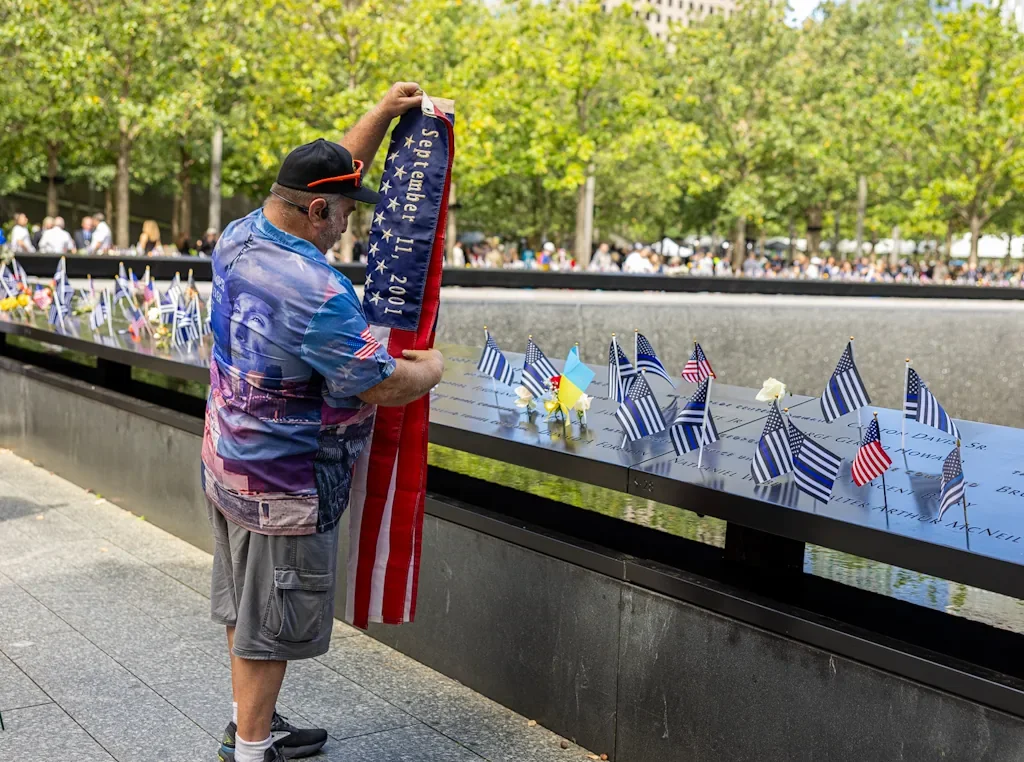
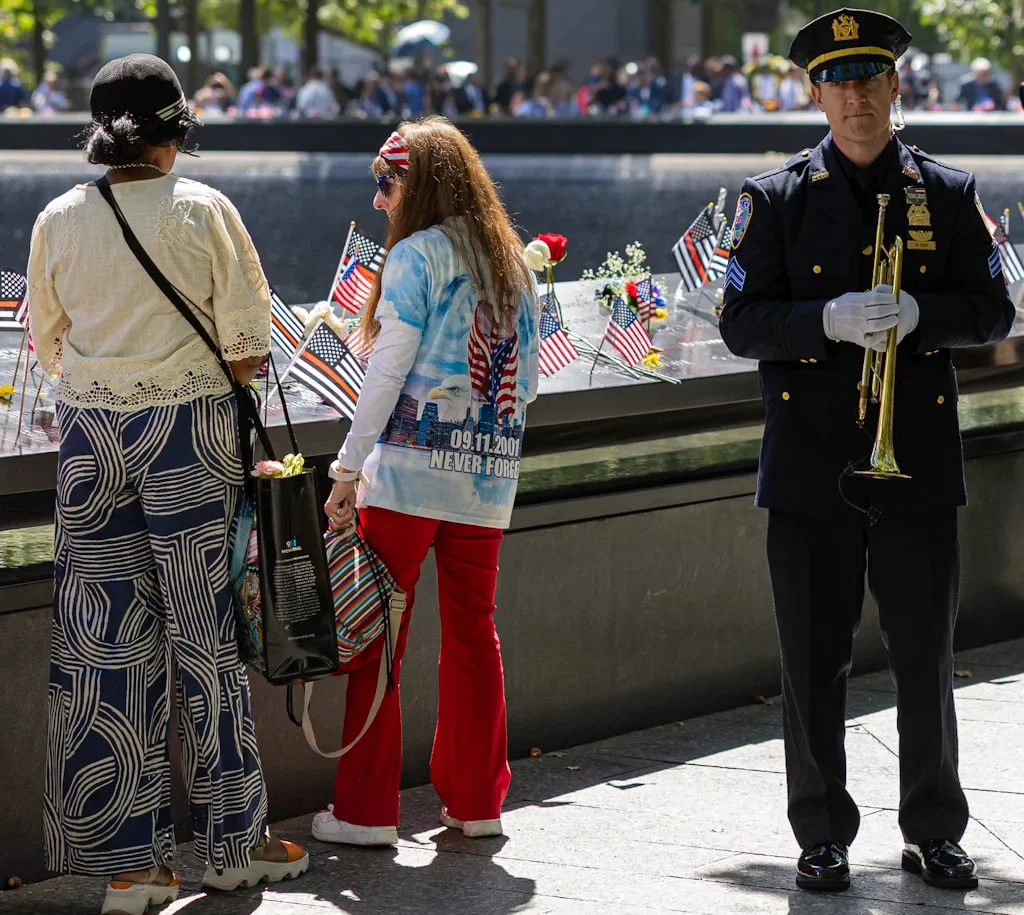
This year’s ceremony held at the Trade Center plaza was host to four living Presidents, as well as family members and friends of those who perished in the attacks. The experience was sobering as I navigated the crowd, examining the faces of so many people tied to one tragic event. Although every individual has their own unique story, it’s surreal to know that all of those people had one central thing in common.
The last day of those New Yorkers, those Americans, serves as one of the reasons why I and millions in the military-affiliated community have the privilege to attend universities like The New School, at virtually no cost, thanks to the Post 9-11 G.I. Bill.
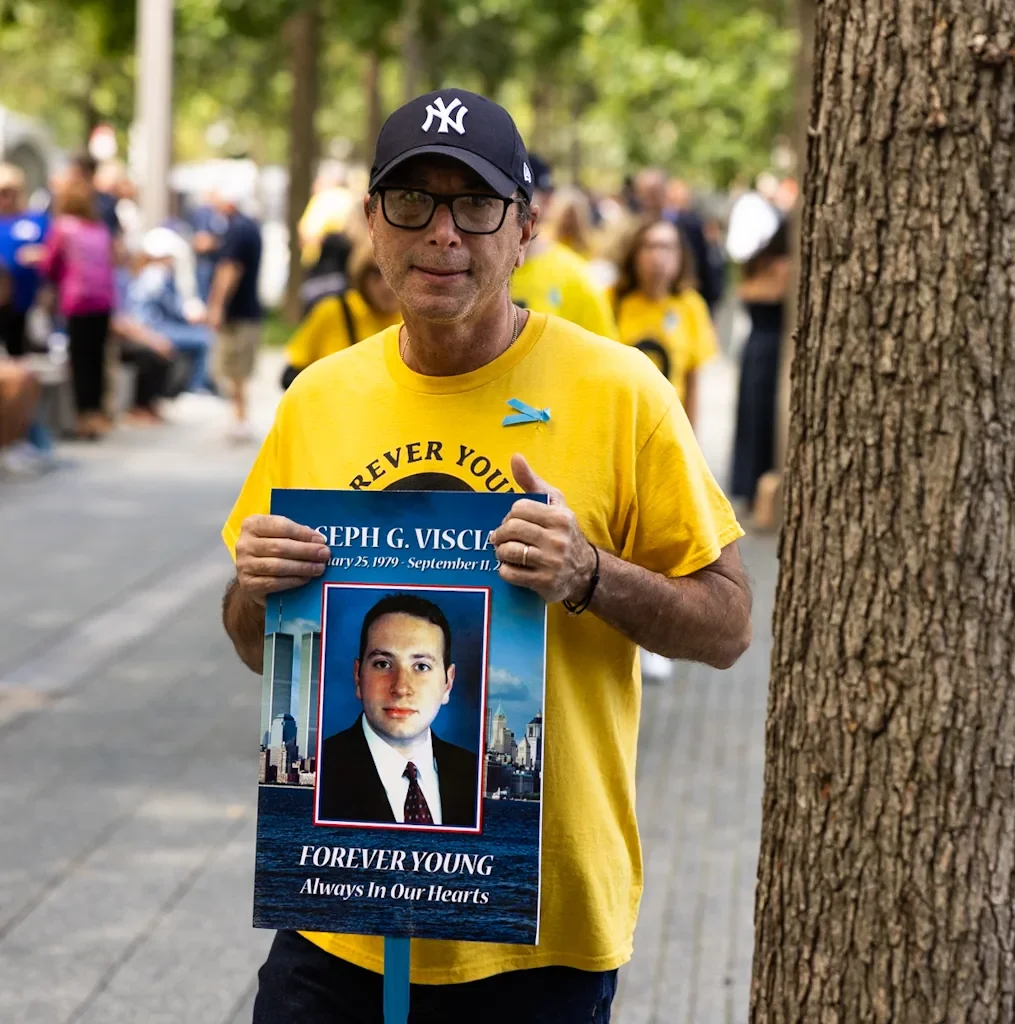
Within the crowd of thousands of faces, the ones that stuck out to me are those that stood still. Faces printed on T-shirts, posters, flyers, memorials; the ones who could no longer speak for themselves and live on only in memory.
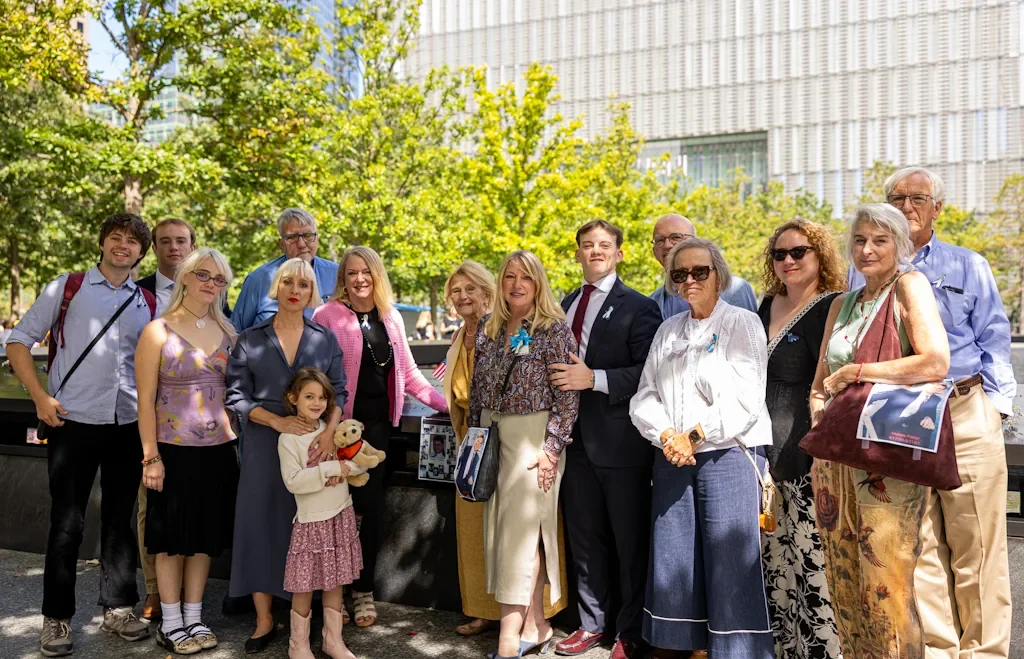
I was asked to take a group photo for the Fisher family. Spanning multiple generations, this family was in attendance to remember a man by the name of Andrew Fisher. Beloved father, son and brother, Andrew was unfortunate enough to be in the wrong place at the wrong time. The ceremony lasted several hours as surviving family members read their names aloud. Andrew’s name joined almost 3000 others who were lost that day.
There was a predominance of canines in attendance. Specifically there were two types of dogs: working dogs and serving dogs. The serving dogs patrolled the event to ensure the safety of the ceremony, while the working dogs protected their humans by performing invaluable tasks. As I saw them, I thought back to a little Bichon Frisé my mom brought home on the night of the attacks.
For as long as I can remember, I had always wanted a dog. Living outside of Washington D.C., my mom was assigned a new sailor who would be working for her at the Pentagon. As her boss, my mom was in charge of making sure she got settled.
Her name was Melissa and she packed up her life and her dog, a Bichon Frisé named Belle, and moved across the country. The only problem was when she arrived, her apartment had fallen through and she had nowhere to stay. She was able to get a room on base, but there was a very strict no pet policy. Later that day, my mom brought Belle home to stay with us for a few months.
Seeing that dog was the most exciting moment of my life. I took extra special care of Belle. I became attached to her and when it was time for Belle to go back to Melissa, I offered to watch Belle for free anytime she needed it.
On September eleventh, we weren’t allowed to leave school until a parent came to pick us up. I sat at my desk for hours after I should have been home playing video games, but at long last, my mom Judy, arrived. Judy prided herself on her pristine uniform. Which is why it seemed strange to me how much ash and blood was on her. We had to walk home because Pentagon employees weren’t allowed to retrieve their cars until later that day.
“On September eleventh, we weren’t allowed to leave school until a parent came to pick us up.”
When we got home, she tried to talk to me about what had happened, but the words never came out. She finally stopped crying when a family friend came to help her get her car. After she left I turned on the tv and no matter which channel I switched to, I saw the same images over and over again. Two identical buildings falling to the ground, people crying and the Pentagon which had a gaping hole where my mom’s office used to be.
I had understood that a national tragedy happened extremely close to home. I had understood that it happened to my mom and her experience was going to change our lives completely. But I was eight.
My mom returned home with her car and held Belle in her arms. We would be watching her until Melissa’s family could come and take her. For so many of us millennials, the eleventh of September will always be the day that the adults disappeared.
“For so many of us millennials, the eleventh of September will always be the day that the adults disappeared.”
At this year’s anniversary memorial, I surveyed the service animals and remembered that over 300 search and rescue dogs were employed to save lives, or recover what was left of them. How many other “Belles” were scared and alone that day, with no one coming to get them?
As the ceremony drew to a close, I found myself exploring the 9/11 memorial museum, located directly below Ground Zero. What seemed so strange is that most museums I have been to, are monoliths to places and events that happened far away or a long time ago. This museum stands in remembrance of a horrific tragedy exactly where it all happened, home.
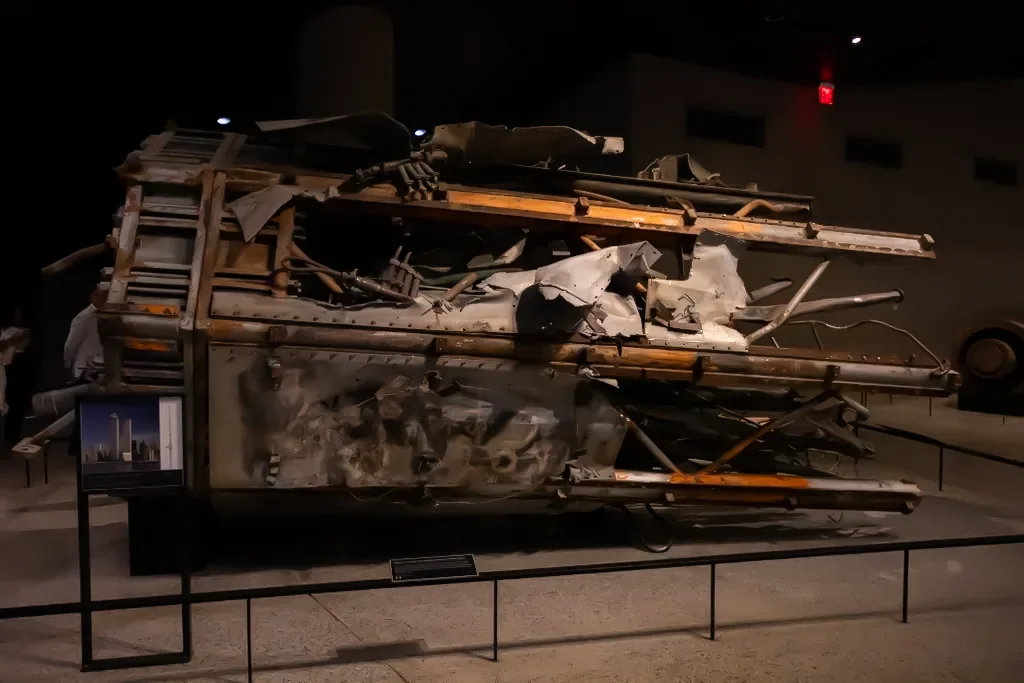
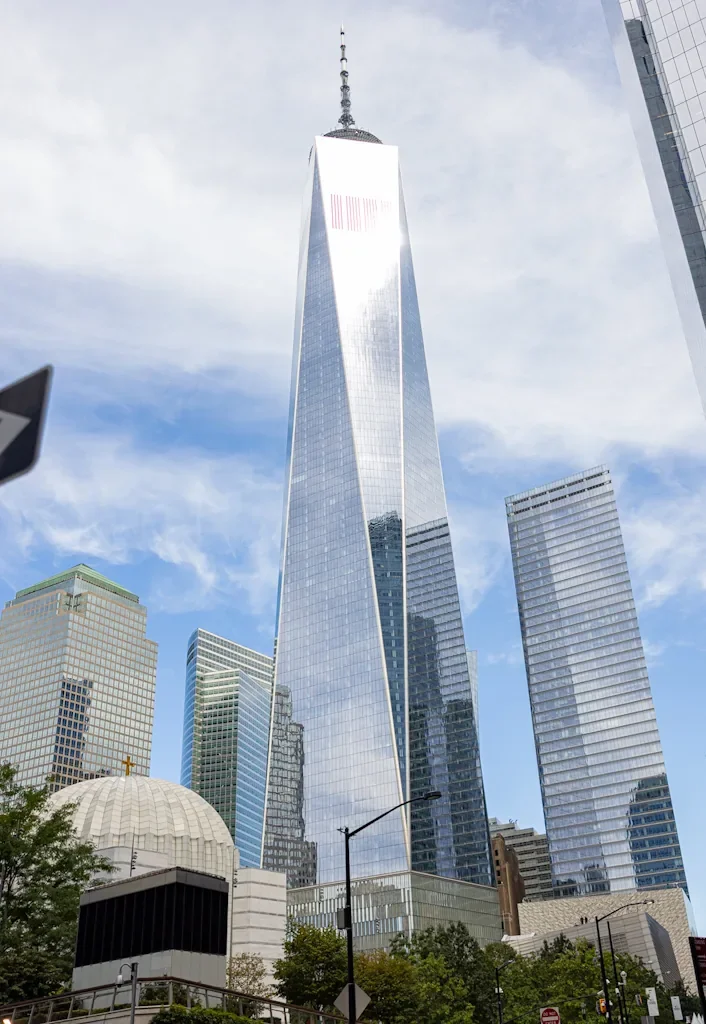
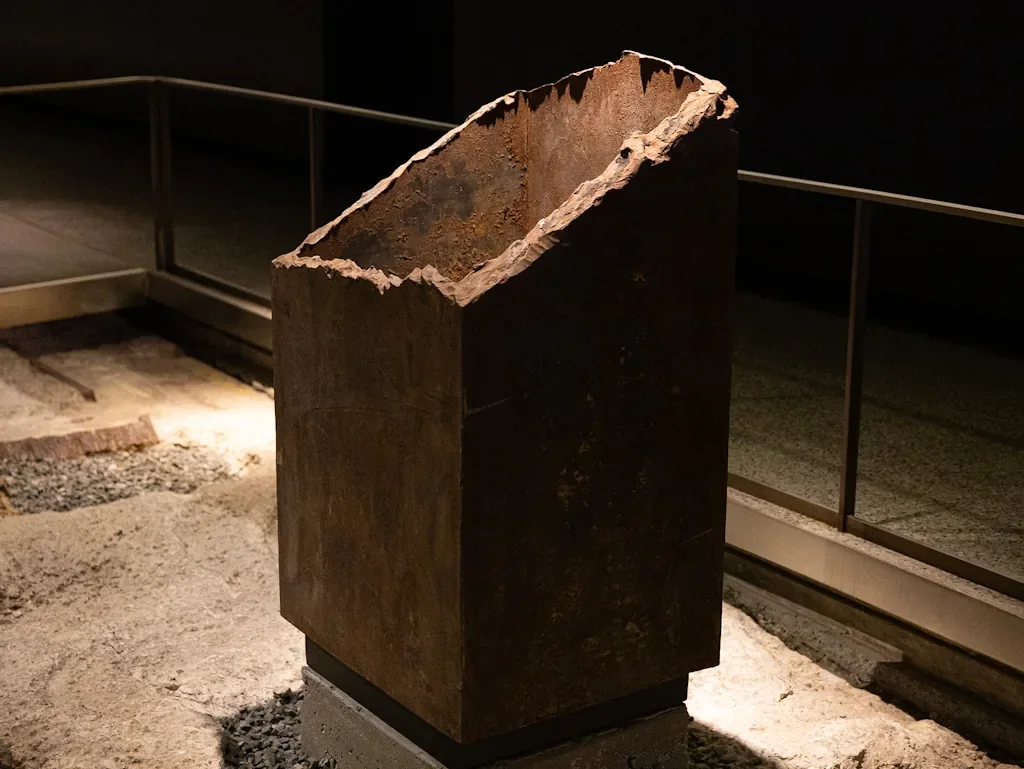
Inside the museum, the heaviest exhibit was the wreckage of the North Tower Radio antenna. Twenty five years ago, the antenna stood 360 feet above the ground. Today it lays 70 feet below the earth. When you look up at the Manhattan skyline, you don’t think about how fragile it is.
I closed out the day by attending a wreath laying ceremony held at the Survivor’s tree. Mark Otto, an Airborne Marine, paid his respects to veteran and hero of 9/11, Cyril Richard “Rick” Rescorla.
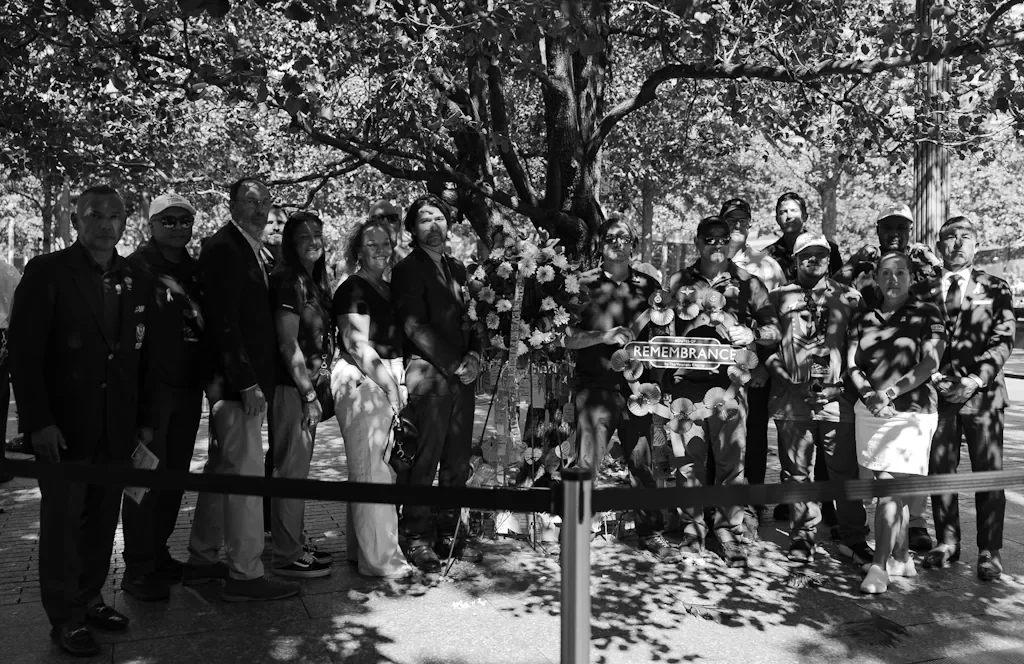
Rick was born in the United Kingdom and later moved to the United States where he served in the Army during the Vietnam war. After retiring in 1990, he became the Director of Security at the World Trade Center where his decision to reject instructions to stay inside during the attack saved the lives of 2,700 people. The wreath journeyed from England to New York City, retracing the life of Cyril Rescorla and maintaining the memory of his heroism.
“His decision to reject instructions to stay inside during the attack saved the lives of 2,700 people.”
Taps, the bugle song used by the military to pay respect to fallen service members, rang out across the plaza through loud speakers. The ceremony was over and the crowd dispersed.
Laughter and tears flowed like rivers throughout the financial district of Manhattan. September eleventh shattered everything we knew to be the American way of life. It is a day that should have never happened, and now it stands as a day that we will never forget.
-Kyle McCrea is a Creative Writing Graduate student at The New School, a Veteran of the U.S. Army, and the son of a 9/11 survivor.