
An Amorphous Definition of the American Story: An Evening with Walter Isaacson
Written by: Kyle McCrea (Army Veteran and The New School Creative Writing MFA)
On Thursday October 1st, Historian and Biographer Walter Isaacson stopped by The New School’s Tishman Auditorium, to speak about his process and the “American Story”. The auditorium was filled with an incredibly diverse group of faces, from current students to the alumni of generations past, all seeking answers.
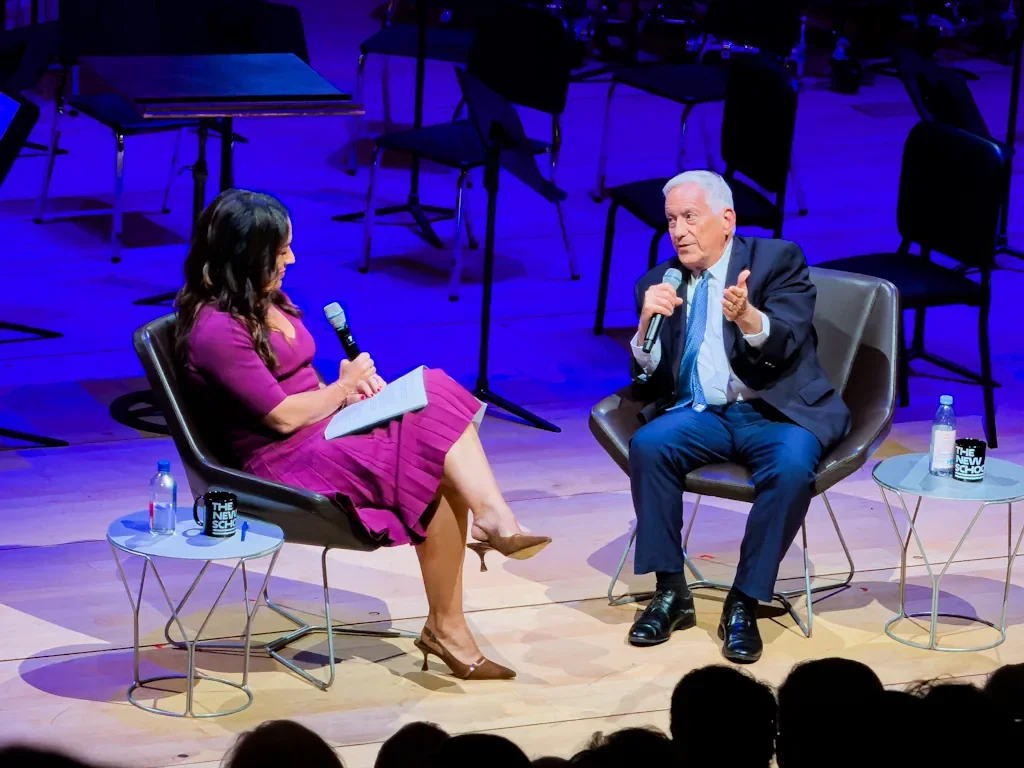
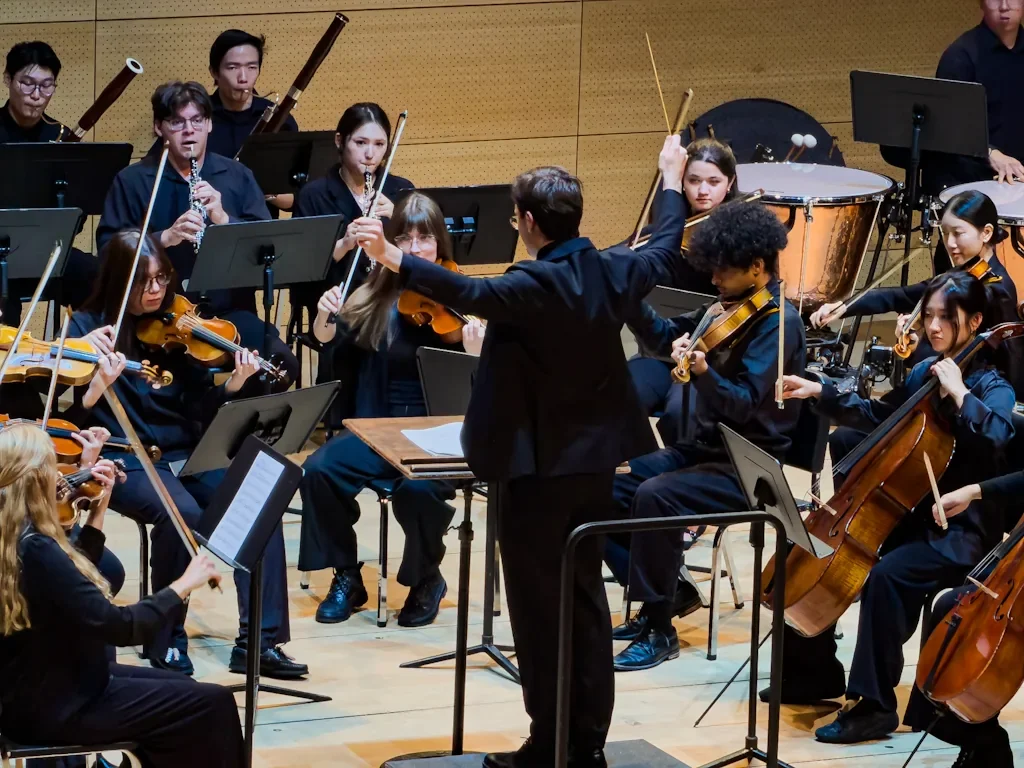
After a brief introduction from the New School President, Joel Towers, the Mannes orchestra performed a rendition of Charles Ives, Variations on “America” (My Country ‘Tis of The). After which, Walter Isaacson sat down with Co-Director of the Center for the American experience, Natalia Mehlman Petrzela. Isaacson, known for the biographies of Albert Einstein and Leonardo DaVinci, emphasized that where he had previously thought history was made by great forces, he now understands how important the individual is,
“Forces make tidal waves, but people make ripples too.”
He let loose a dirty secret all biographers share: behind every great person in history, is a team of people that helped them achieve greatness.
Speaking on his process, Isaacson resolutely stated he does not do one hour interviews to then go off and write. Instead, he demands to spend at least 1-2 years embedded with his subject (assuming they are alive),
in order to dive as deeply into who they are and how they interact with the world. He recalled his time spent with Steve Jobs, who apparently was the first person to directly approach him and ask (or request) “Do one about me next”. Jobs’s request came one day after his cancer diagnosis.
But heads turned when Isaacson switched to the topic of AI, revealing that he controversially uses it quite extensively. He clarified,
“Claude can write better, but every sentence will be mine.”
He explained that while writing, he plugs his research materials into Claude so that he can ask questions like, “What was this person doing on this day, at this time?”. Claude then provides him a brief summary and shows him where in the materials this is stated so he can fact check the information.
Isaacson is surprisingly optimistic about the future however, as he believes that as AI takes over the fields of science and mathematics, this will in turn increase the value of human creativity. His only moment of pause is to emphasize that when technological innovation blooms, regulation becomes necessary.
As the interview drew to a close, he slyly let slip that his next project is about the life of renowned scientist, Marie Curie. He recounts seeing her personal notebooks, which are to this day radioactive and require wearing specialized equipment in order to interact with.
Throughout the interview, Isaacson never quite answers the central question of what makes a story, “American”. However, Isaacson did offer a deeper insight when he spoke about the central thing all great figures of history have in common. They all identify as outsiders.
Isaacson claims that every great person throughout history was an outsider of some kind within the culture of their time, ultimately having to break barriers in order to achieve greatness. Which ultimately feeds into the unifying philosophy of what makes a great American story. Persevering through an imperfect system to change the world around you. The idea that anyone’s, even yours, might be the next great American story.
Going further, he uses AI as a database and directory. Sort of like an intelligent, “Ctrl-F”.
While writing, Isaacson plugs his research materials into Claude so that he can ask questions like, “What was this person doing on this day, at this time?”. AI then provides him a brief summary and shows him where it’s sourced in the materials so he can fact check the information.
Isaacson was surprisingly optimistic about the future however, as he believes that as AI takes over the fields of science and mathematics, this will in turn increase the value of human creativity. The only pause to his glowing optimism was his emphasis that as technological innovation blooms, regulation becomes necessary.
Closing the interview, he slyly let slip his next project is about the life of renowned scientist Marie Curie. Isaacson found it remarkable that her personal notebooks, which are to this day radioactive, required him to wear specialized equipment in order to interact with them.
Isaacson never directly answered the central question of what makes a story, “American”. However, his deeper insight came when speaking on what historical figures have in common: they all identify as outsiders.
Isaacson claimed that every great person throughout history was an outsider of some kind within the culture of their time, ultimately having to break barriers in order to achieve greatness.
This is the unifying philosophy of what makes a great American story; persevering through an imperfect system to change the world around you.
It is that doggedness, that determination, that grit, which can make anyone’s story: yours, your neighbor’s, a corn farmer in Iowa’s, the next great American story. Because to struggle and overcome, against all odds, is the story of America.
-Kyle McCrea is a Veteran of the U.S. Army and a Creative Writing Graduate student at The New School.